Local SEO for Baton Rouge Businesses in 2026
Local SEO, Google Local Pack, Baton Rouge Business
How Local Search Actually Works for Small Businesses in 2026
I talk to a lot of Baton Rouge business owners who are doing good work, treating customers right, and still feel invisible when someone nearby searches “plumber near me” or “best po’boy in Baton Rouge.” The problem isn’t your work ethic; it’s how Google decides who shows up where. In 2026, understanding local search is no longer optional if you want steady, high-intent customers walking through the door or calling your number.
First, what is the Google local pack and why should you care?
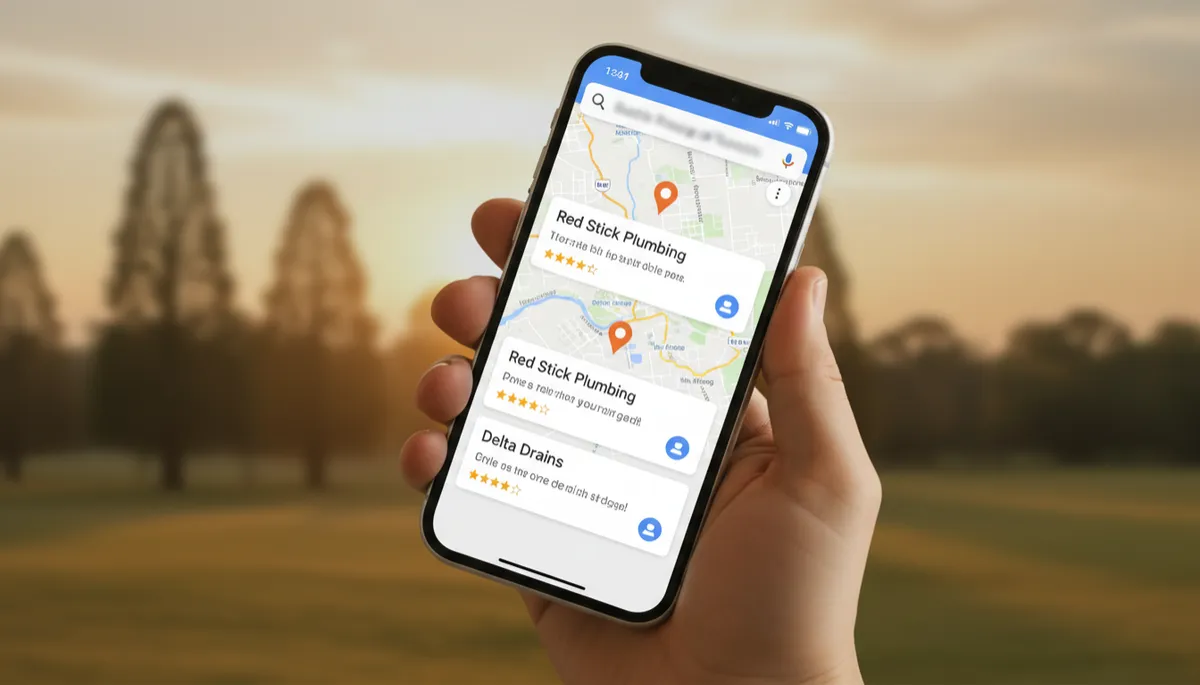
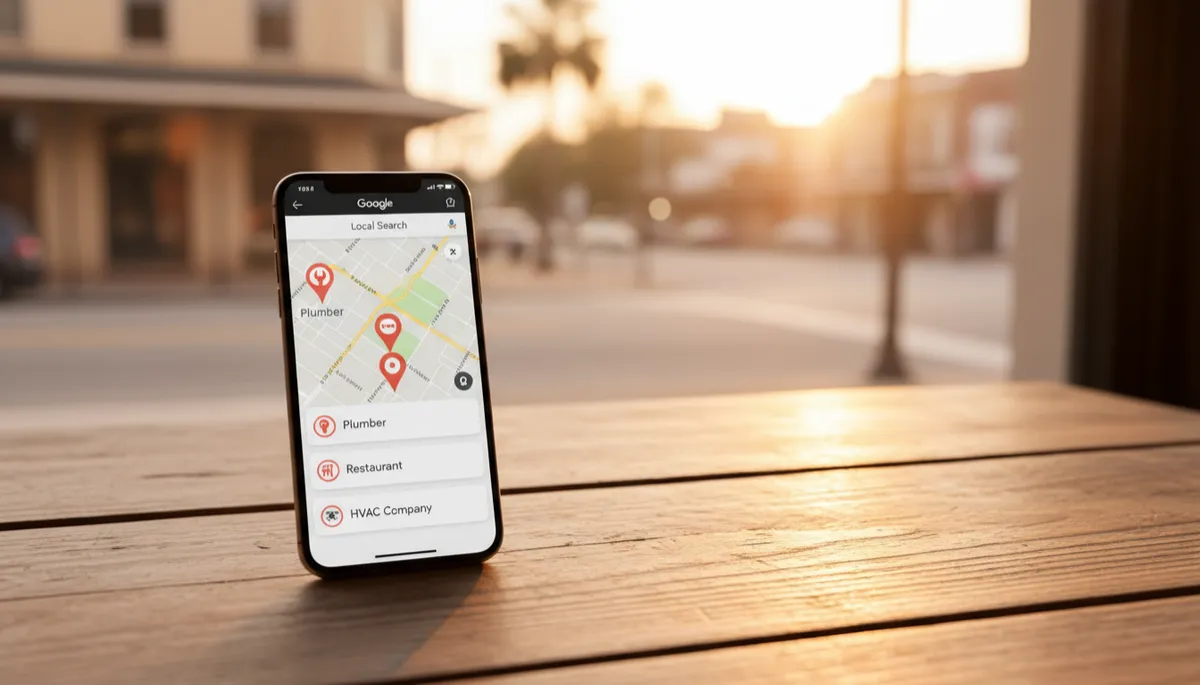
When someone in Mid City searches “AC repair Baton Rouge” on their phone, the box with the map and two or three business listings at the top is the Google local pack. It usually shows:
- A small map with pins
- 2–3 businesses with name, rating, review count, hours, and a call button
For most local searches, that pack gets the majority of clicks and calls. In other words, showing up in the Google local pack often matters more than having your website rank below it. Your site still matters, but the map pack is the front door for local customers in 2026—especially on mobile where screen space is tight and AI Overviews sit on top of everything else.
The three core ranking signals: proximity, relevance, prominence
Google still leans on three main pillars for local search: proximity, relevance, and prominence. Think of them like knobs on a mixer—Google is constantly adjusting them based on the search and the user.
1. Proximity: how close you are to the searcher
If someone is standing downtown searching “coffee near me,” Google uses GPS on mobile or IP on desktop to find what’s actually nearby. You can’t fake your location, and you shouldn’t try—recent spam updates have hit fake addresses hard. What you can do is make sure your address, service area, and map pin are correct so you show up for the neighborhoods you truly serve, whether that’s Southdowns, Sherwood, or Zachary.
2. Relevance: how well you match what they typed
Relevance is where your Google Business Profile (GBP) does a lot of work. Google looks at your primary category, services, description, and even your website content to decide if you’re a good match for “emergency plumber” versus just “plumber.” If you’re a Baton Rouge HVAC company but your profile only says “contractor,” you’re leaving money on the table because Google can’t clearly match you to HVAC searches.
3. Prominence: how trusted and well-known you appear online
Prominence is Google’s way of asking, “Do people in Baton Rouge actually know and choose this business?” It looks at:
- Review volume, recency, and responses
- Mentions of your business across the web (citations and links)
- How often people click, call, and ask for directions from your listing
In 2026, Google has turned up the dial on recent activity. Fresh photos, up-to-date hours, and recent reviews carry more weight than a big pile of old, stale ones.
Citation consistency and reviews: the fuel behind prominence
Two areas I see Baton Rouge businesses struggle with are citations and reviews.
Citations: your business “ID card” across the web
Citations are listings of your business name, address, and phone (NAP) on sites like Yelp, Facebook, Yellow Pages, and local directories. Google uses these to confirm you’re real and stable. One or two bad listings won’t kill you, but if your address is different in half a dozen places, it sends mixed signals and can drag down your local search confidence score.
Reviews: more than just your star rating
Reviews now feed directly into rankings in three ways:
- Volume: More reviews = more data for Google and more social proof for customers.
- Recency and velocity: A steady stream of new reviews beats a big burst from three years ago.
- Responses: Replying to reviews—good and bad—shows you’re active and engaged.
For example, a Gonzales-based roofer with 80 reviews from the last 12 months and consistent responses will usually outrank a competitor in Baton Rouge proper with 200 reviews but nothing new in two years—even when proximity slightly favors the older listing.
Why Google Business Profile completeness matters so much in 2026
Across thousands of profiles, one of the strongest correlations with top 3 Google local pack rankings is how complete your profile is. Google wants to recommend businesses it understands well. That means:
- Accurate name, address, phone, website, and service area
- Correct primary and secondary categories (e.g., “Plumber” plus “Drainage service” if appropriate)
- Detailed services and products filled out, not left blank
- Business hours that reflect when you really answer the phone
- Current photos of your team, work, and location
In 2026, Google’s AI Overviews often pull directly from your profile. If your GBP is thin or outdated, you’re less likely to be featured in those AI summaries that now sit above the map pack for many local searches.
Practical steps Baton Rouge businesses can take today
Here’s a simple, non-technical checklist you can work through over the next 2–3 weeks. You don’t need to be a marketer—just consistent.
- Claim and verify your Google Business Profile. If you haven’t already, search your business name on Google and click “Own this business?” to start. Finish verification, even if it means waiting on a postcard.
- Fill out every field you reasonably can. Categories, services, description, hours, photos, attributes (like “Black-owned” or “Wheelchair accessible”)—don’t leave obvious blanks.
- Clean up your citations. Make a quick list of your major listings (Google, Facebook, Yelp, BBB, chamber, industry directories). Confirm your name, address, and phone match exactly—down to “Suite” vs “Ste.”
- Build a simple review habit. Train your front desk or techs to ask satisfied customers for a review while they’re still with them, then text or email a direct link. Aim for 3–5 new reviews per month, every month.
- Post fresh content monthly. Add new photos and one short update each month—new menu items, seasonal offers, before/after shots of a job in Prairieville. This signals that you’re active and current.
Tools like Local Lens can help Baton Rouge businesses keep all of this organized—especially citations, reviews, and profile updates—so you’re not trying to juggle it across a dozen different logins.
Bringing it all together for your Baton Rouge business
Local search in 2026 is more dynamic and AI-driven, but the fundamentals haven’t changed: proximity, relevance, and prominence still decide whether you’re one of the two or three businesses that show up in the Google local pack when it counts. If you treat your Google Business Profile like a living storefront, keep your information and reviews fresh, and stay consistent across the web, you’ll earn more of those high-intent calls from people right here in the Baton Rouge area.
Have questions about how your business shows up in local search? Reach out to Kurt Howard, Local Business Technology Advisor, serving the Baton Rouge area.